
One brief, three AI tools: what Claude, ChatGPT and Gemini built this week
Every week brings new model names, new modes and new ways to run AI agents. This update is where we sort out what changed, what it means if you're building apps without being a programmer, and what stays exactly the same.
This week's test: one brief, three tools
We pasted the same brief into all three, word for word: a request-and-approval tracker where staff submit requests, a manager approves or rejects with a reason, anything over €500 needs a second approver, and totals show by status.
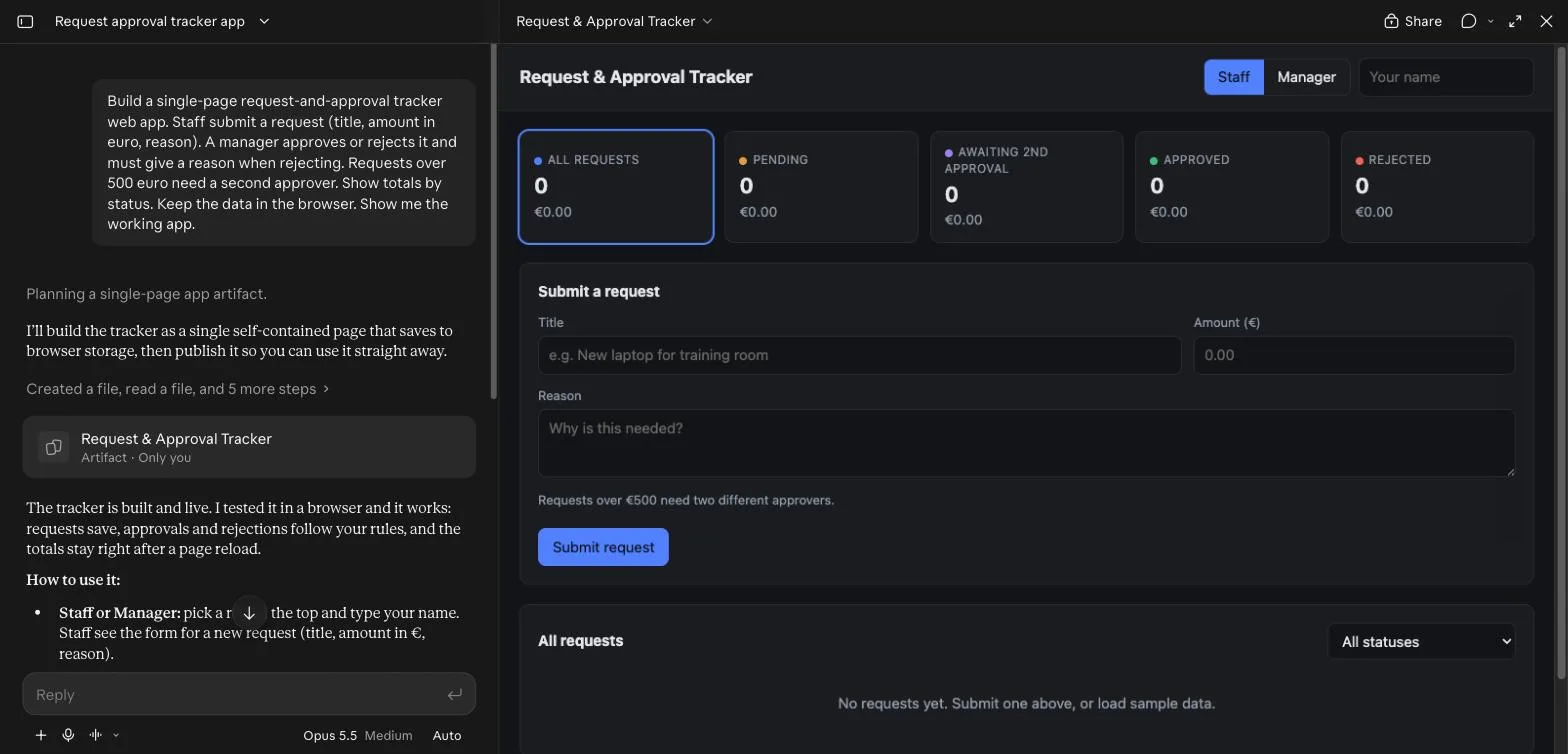
Claude (Opus 5.5, Medium effort) built the tracker as a page, tested it in a browser, and published it privately in about two minutes. Staff and Manager roles, five status totals and the two-approver rule were all there.
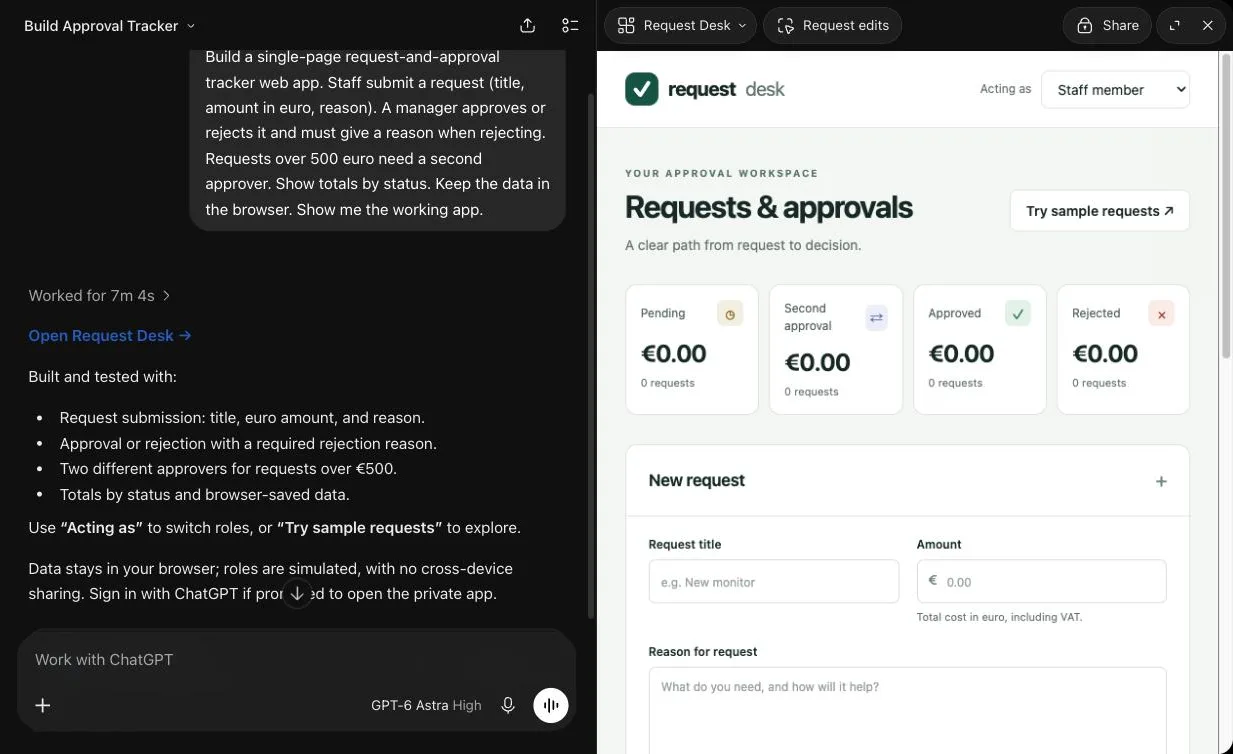
ChatGPT in Work mode (GPT-6 Astra, High) took about seven minutes. It tested the app in its own cloud browser and published "Request Desk" as a Site, with a role switcher and sample data. It also labelled the amount "including VAT", which wasn't in the brief.
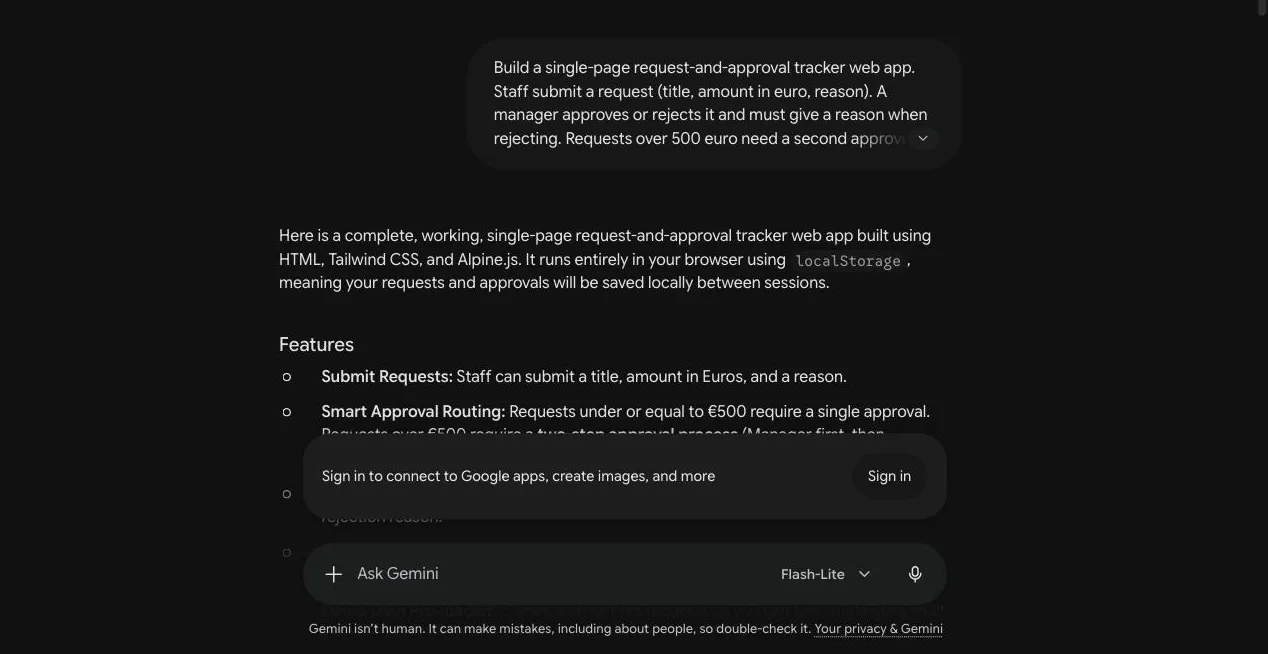
Gemini, signed out on the free Flash-Lite model, wrote the whole app as code to save and open yourself. There was no running preview and no publishing. It also added a "Finance" second approver that we never asked for.
The lesson: all three are capable, and all three filled gaps in the brief with their own assumptions. Your job doesn't change with the tool. Check every result against your business rules and acceptance criteria before you trust it.
What's new from the three companies
Anthropic. Claude's model menu now runs from Fable 5.2 (for the toughest challenges) through Opus 5.5 and Sonnet 5.5 to Haiku 5.5. There's an effort setting from Low to Max, and Max can use your limits four or more times faster. In Claude Code, dynamic workflows are generally available: Claude writes a plan that runs many subagents in parallel, cross-checks what they find and returns one answer. It shows you what will run and asks before starting. (Models overview, dynamic workflows)
OpenAI. GPT-6.1 Terra is now in ChatGPT Work and Codex, though not in Chat. It's aimed at agent-style work, image understanding and computer use. The Codex CLI gained an agent command centre (codex agents) that flags unread results across your runs, and on iPhone you can now open a sub-agent's own conversation. (ChatGPT and Codex changelog)
Google. Gemini 4 Argon, Google's frontier model for long, multi-step work, arrived on 13 October. Google Antigravity now also has Gemini 4 Hydrogen and a new Orchestrator for coordinating several agents. Antigravity still has a free tier with a weekly quota, which makes it the cheapest way to try agent coding. (Introducing Gemini 4 Argon, Antigravity)
What it means for you
- Learn the dials, not the names. Model tier, effort and mode work the same way everywhere. The names will change again next month.
- Agents are getting more parallel. All three companies now run several agents at once. That makes planning, keeping agents apart and independent review more important, not less.
- Stay portable. Keep your brief, decisions and instructions in files, and your code in Git. Then switching tools costs an afternoon, not a rebuild.
AI Coding for Non-Programmers covers all of this in Part 4, "Choosing tools and scaling up", which updates from this page every week.